Blue hospital pads are essential products in healthcare settings, providing comfort and protection for patients. These pads are designed to absorb moisture and reduce the risk of skin irritation, making them crucial for hospitals, nursing homes, and other medical facilities. As a buyer, concerns may include product quality, material safety, and cost-effectiveness. This article aims to provide insights into blue hospital pads, covering essential topics that will assist purchasing managers, distributors, and healthcare providers in making informed decisions.
When selecting blue hospital pads, buyers should consider several key factors:
Absorbency: The primary function of hospital pads is to absorb moisture. It’s vital to assess the absorbency level required for specific applications, as this can vary based on patient needs and usage scenarios.
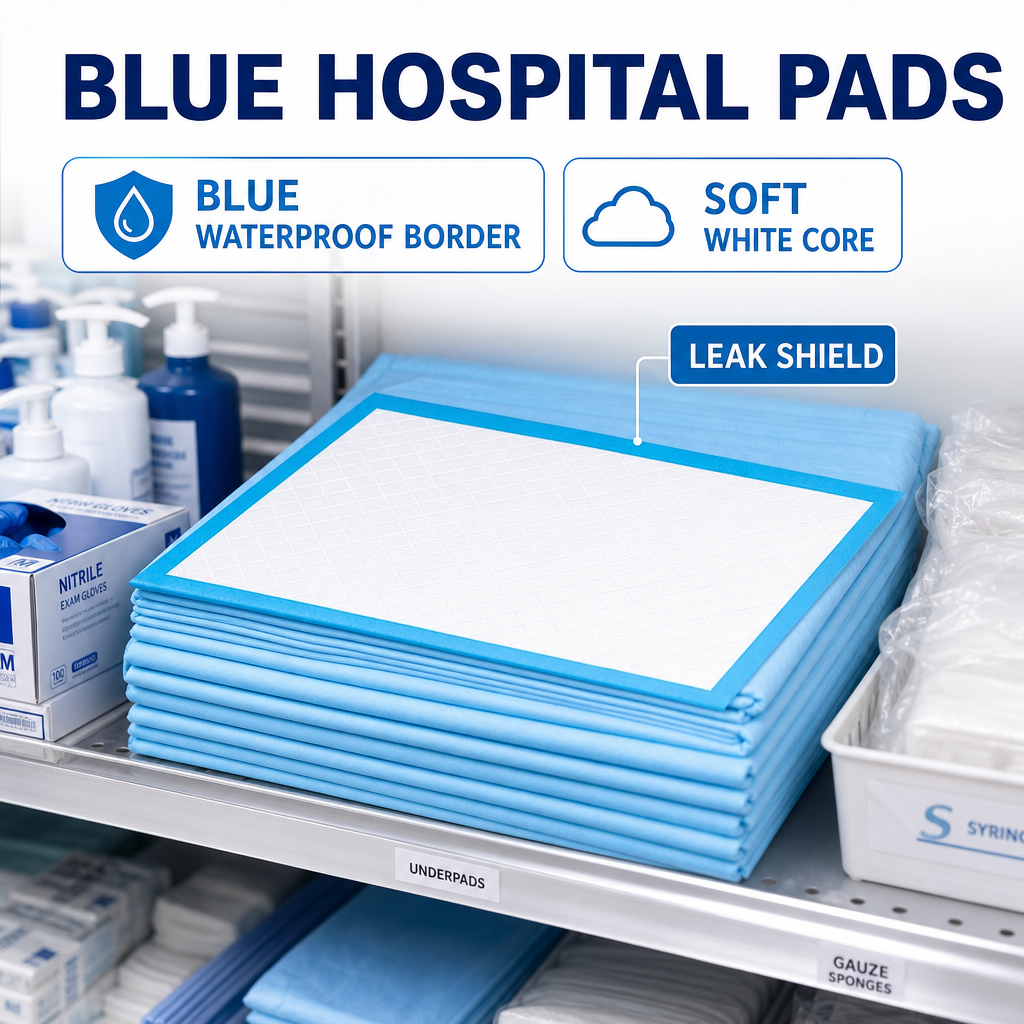
Material: Hospital pads are usually made from a combination of non-woven fabrics, absorbent cores, and waterproof backings. Buyers should evaluate the material for softness, durability, and hypoallergenic properties to ensure patient comfort and prevent skin irritation. For instance, Kimlead underpads disposable incontinence pad bed pad can be a suitable alternative to consider.
Size and Dimensions: Pads come in various sizes to accommodate different patient needs. Ensure the dimensions align with the intended use, whether for bed use, wheelchair protection, or other applications.
Quantity and Packaging: Consider the minimum order quantities (MOQs) and packaging methods available. Bulk purchasing can often reduce costs, but it’s important to assess storage capabilities and shelf life.
Certifications and Compliance: Verify that the products meet national medical device standards and other relevant certifications to ensure safety and efficacy.
Customization Options: Some manufacturers offer OEM and ODM services, allowing buyers to customize sizes, absorbency levels, and packaging to suit specific needs.
Finding trustworthy suppliers for blue hospital pads involves a few strategic steps:
Industry Research: Start by researching manufacturers that specialize in hygiene products, particularly those focusing on hospital supplies. Assess their reputation through industry reviews and testimonials.
Networking: Attend industry trade shows and conferences where suppliers showcase their products. This provides an opportunity to meet representatives, ask questions, and even test samples.
Online Directories: Utilize online B2B marketplaces and directories that list verified manufacturers and distributors. Look for companies with a strong track record in manufacturing medical supplies.
Request Samples: Before making bulk purchases, request samples to evaluate product quality and performance. This can help identify any potential issues early in the decision-making process.
Evaluate Manufacturing Capabilities: Ensure that potential suppliers operate under stringent quality control measures, have first-class production facilities, and meet global standards.
While blue hospital pads are designed to provide comfort and safety, issues may arise during use. Here are some common problems and their solutions:
Insufficient Absorbency: If pads do not absorb moisture adequately, it may lead to skin irritation. Buyers should verify the absorbency ratings and consider using pads with a higher absorption capacity for patients with increased needs. Products like Kimlead underpad for bed size large underpad absorbent incontinence underpad might be helpful.
Leaking: Inadequate sealing or low-quality materials can cause leaks. Ensure that the pads have a waterproof backing and are designed to prevent leakage during use.
Skin Reactions: Some patients may experience allergic reactions to certain materials. Selecting hypoallergenic pads and conducting patch tests can help mitigate this risk.
Sizing Issues: Pads that are too small can lead to inadequate coverage. Buyers should choose appropriate sizes based on the intended application and patient mobility.
Durability: Pads that tear or degrade easily can compromise their effectiveness. Evaluate the quality of materials used and consider factory samples to assess durability before placing large orders.
The cost of blue hospital pads can vary significantly based on several factors:
Material Quality: Higher-quality materials may lead to increased costs, but they often result in better performance and patient satisfaction.
Production Volume: Bulk purchases typically yield lower unit costs. Buyers should negotiate with suppliers for better pricing based on order quantities.
Customization: Customizing pads to meet specific needs can affect pricing. Buyers should weigh the benefits of customization against potential cost increases.
Shipping and Logistics: Consider the shipping costs associated with bulk orders. Working with suppliers that offer competitive shipping rates can reduce overall expenses.
Supplier Reputation: Established suppliers with a proven track record may charge more for their products but often provide better quality assurance and reliability.
Kimlead's design experts can alter the appearance of your product dimensions, function and appearance to meet customer requirements. Our team closely communicates with clients to get a better understanding of their specific requirements, ensuring the product they receive is up to requirements. We offer high-quality adult hygiene products and provide OEM and ODM services that are based on the clients' brand requirements. From analysis of requirements to sample production, and then to the production of mass quantities and delivery Our process of customization ensures each Puppy pads is up to the most stringent standards. By selecting Kimlead you can enjoy professional customization services that cater to your particular needs.
Kimlead has over 15 years of Puppy pads in manufacturing high-end hygiene products Our factory spans over 46 000 square metres and is outfitted with the latest production equipment like Mitsubishi fully-servo high-speed automatic production lines This includes one production line's daily output of 200 000 pieces Our production processes comply with international standards and are accredited by CE FDA ISO13485 and ISO9001 We utilize the Techmach vision inspection system and tension control system to ensure that every product is subjected to a rigorous inspection at more than 200 locations Our manufacturing capabilities not only ensures efficient production however also meets large-scale orders needs which ensures timely delivery Kimlead's impressive manufacturing capabilities as well as efficient production processes are yours if you choose us
Kimlead continuously invests in RD and innovation to maintain our market leadership. We have a professional RD team dedicated to developing new materials, techniques, and designs to meet the constantly changing market requirements. We have created our own range of biodegradable product, using eco-friendly production methods and energy-efficient design. Our innovations don't just enhance the product's performance but also promote sustainability and environmental friendliness. We are always looking for Grown up diapers, striving to deliver the most sophisticated and best quality products to our customers. Kimlead is a company that is committed to innovation and strives for excellence.
Kimlead utilizes strict Underpad control processes to ensure all products meet international standards. Our manufacturing facility is equipped with the most sophisticated laboratory for testing and an established quality control system that comprises more than 30 different kinds of tests. We adhere to international certification standards like ISO and CE to ensure the security and reliability of our products. We also carefully select our raw materials in order to ensure that each batch is in line with the highest quality standards. We do not just focus on the conformance to standards for products However, we also offer high-quality and safe products to provide our customers with the highest assurance of their security. Kimlead products are of best quality and comply with all requirements.
The materials used in blue hospital pads play a crucial role in their performance. Understanding these materials can help buyers make informed decisions:
Top Layer: Typically made from soft, non-woven fabric, the top layer is designed for comfort against the skin. It should be breathable to help maintain skin integrity.
Absorbent Core: The core is usually composed of super absorbent polymer (SAP) and fluff pulp. SAP can quickly absorb and lock in moisture, while fluff pulp provides additional absorbency. Buyers should assess the absorbent capacity based on patient needs.
Back Layer: The back layer is often made from a waterproof material to prevent leaks. This layer needs to be durable and resistant to tearing, ensuring that the pad remains intact during use.
Sealing Methods: The edges of the pads must be sealed properly to prevent leakage. Buyers should examine the sealing technology used by manufacturers, as this can greatly affect performance.
Hypoallergenic Properties: Materials should be evaluated for hypoallergenic characteristics, especially for sensitive patients. This ensures safety and comfort throughout use.
By understanding these materials and their implications, buyers can select the most suitable blue hospital pads for their specific applications, enhancing patient care and operational efficiency.

Kimlead Hygiene mainly produces adult diaper, adult pull up diaper, under pad, pet training pad, and operating international OEM/ODM business.
 EN